

At Biotrial, we provide expert pharmacometrics consulting and quantitative clinical pharmacology services designed to support critical decision-making throughout drug development.
By integrating pharmacokinetic (PK) data, pharmacodynamic (PD) endpoints, and patient-level variability, modeling and simulation approaches allow sponsors to move beyond descriptive results and generate predictive insights that guide smarter development strategies.
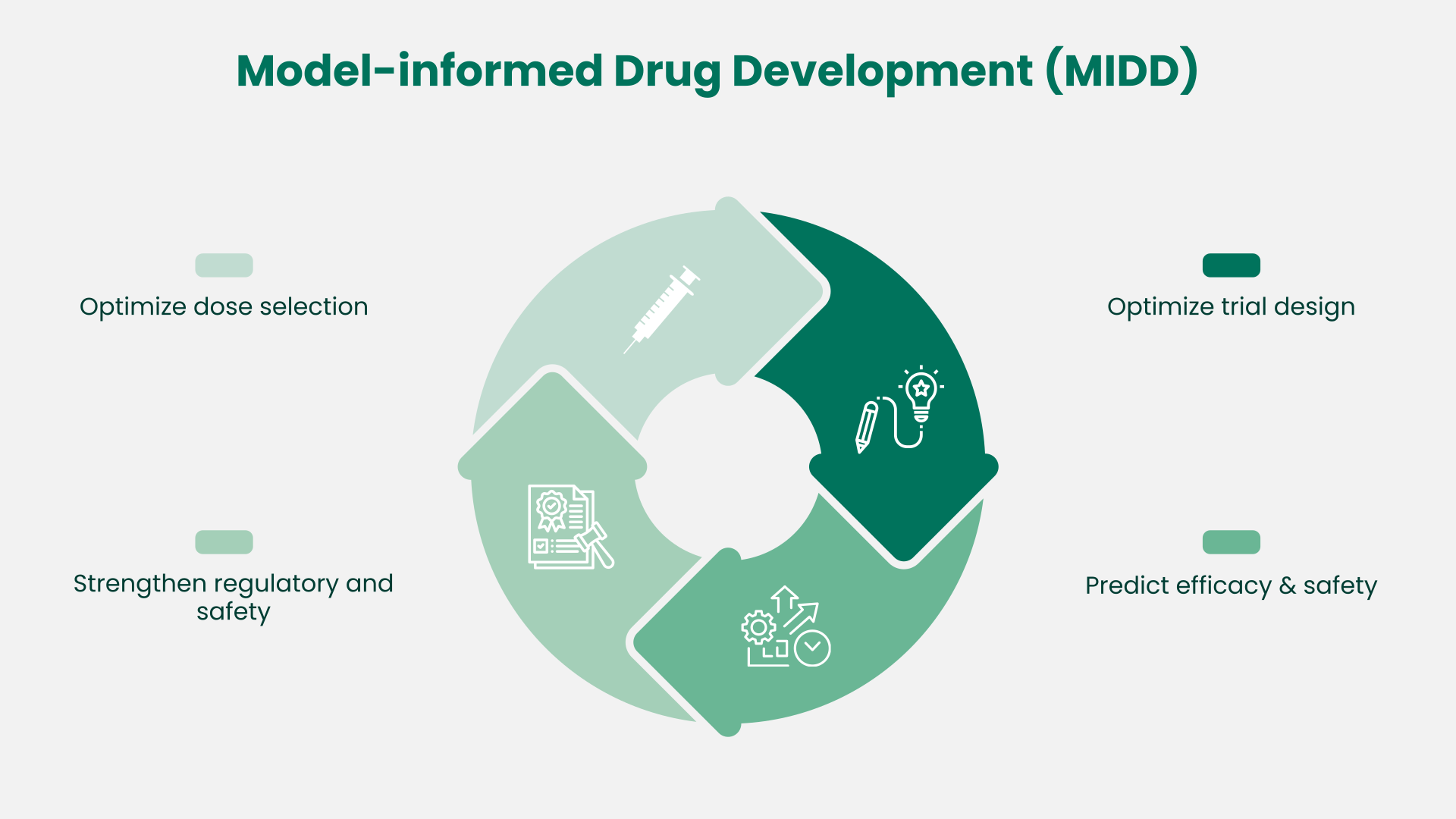
Our pharmacometricians translate complex datasets into actionable evidence through population PK (PopPK) modeling, exposure–response analyses and Physiological based pharmacokinetic modeling and simulation (PBPK). We incorporate these into Model-Informed Drug Development (MIDD) frameworks and clinical trial simulations. These approaches enable optimized dose selection, improved study design, reduced uncertainty, and stronger regulatory justification of development strategies.

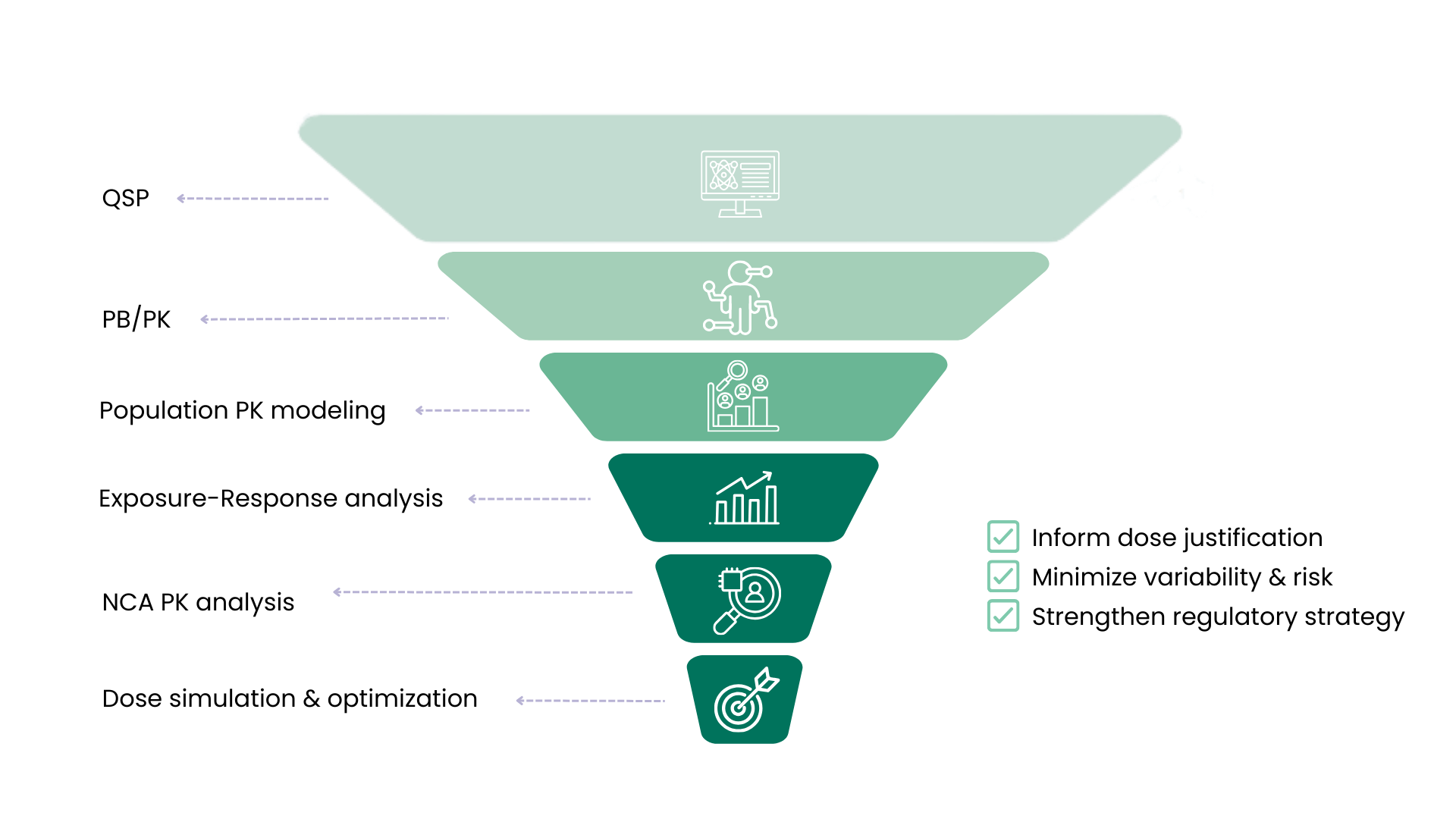
We prepare regulatory-ready quantitative packages compliant with global standards (FDA, EMA, PMDA) which will include the documentation for :
Electroencephalography (EEG) recordings are extremely rich and can be complex to analyze. Modeling and simulation approaches for such data can bring additional key insights to help sponsors get the most out of these data.
One project our team worked on last year was a first in human trial collecting EEG data at many different dose levels. Such a study design provides very rich data for pharmacometricians to work with. In the case of this project, we were able to develop a PK/PD model investigating the qEEG response relative to the drug exposure and use this model to simulate responses or estimate sample size for future trials.

Biotrial’s pharmacometric and PK/PD modeling expertise supports drug development across all clinical phases and therapeutic contexts. From preclinical and early First-in-Human (FIH) studies to late-stage registration programs, our quantitative approaches help sponsors optimize dose selection, anticipate variability, and strengthen evidence for key development decisions.
We routinely contribute to dose escalation and dose-ranging strategies, proof-of-concept trials, and exposure–response evaluations that inform labeling and benefit–risk discussions. Our team also supports specialized applications such as drug–drug interaction (DDI) assessments, pediatric development planning, and analyses in renal or hepatic impairment populations. When relevant, we can integrate real-world evidence or external data sources to complement clinical findings and enhance model-informed strategies.
Tailored, decision-driven modeling strategies with clear, high-quality deliverables for teams and agencies
